

The COVID-19 pandemic has accelerated the digitalization of science, with preprints emerging as a powerful tool for rapid dissemination of research findings. However, this newfound openness has also raised concerns about the quality and impact of scientific information in the public sphere.
Preprints, which are unpublished manuscripts posted online before peer review, can be valuable for sharing preliminary results and accelerating the flow of knowledge, especially during times of crisis. However, the lack of rigorous peer review can also lead to the spread of misinformation and disinformation.
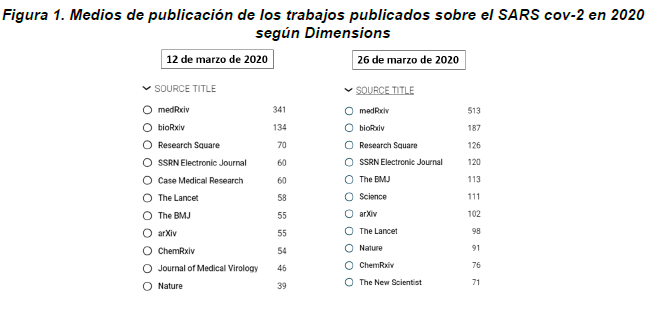
A prime example is the case of a preprint titled «Uncanny similarity of unique inserts in the 2019-nCoV spike protein to HIV-1 gp120 and Gag» which suggested genetic similarities between SARS-CoV-2 and HIV-1. Despite receiving criticism from experts, the preprint went viral on social media and in the news, fueling conspiracy theories about the origin of the virus.
This incident highlights the double-edged sword of open science. While preprints can democratize access to research, they also demand greater responsibility from scientists, journalists, and the public.
Challenges and opportunities for Science Communication
The pandemic has also challenged traditional peer review processes, leading to a surge in preprint publications. This has put pressure on scientific journals, which have traditionally relied on pre-publication exclusivity to ensure the reliability of information. The Ingelfinger rule, which tacitly prohibited pre-publication dissemination in scientific journals to ensure information reliability, had previously delayed the adoption of preprints.
Following this paradigm shift, publishers are now capitalizing on the lucrative business of open-access article processing charges. In response,some journals have adapted their policies to allow preprints to be cited and discussed in their pages. However, this raises concerns about the potential for journals to prioritize lucrative open-access fees over the quality of scientific content.
Amidst this changing landscape, the role of science journalism has become more crucial than ever. Journalists must be able to critically evaluate preprints, identify credible sources, and communicate complex scientific information to the public clearly and engagingly.
Speed vs. Scrutiny: The challenge of accelerated scientific publishing
The stance of science journalists seems clear. In 2021, the Spanish Foundation for Science and Technology (FECYT) and the Spanish Association for Scientific Communication (AECC) organized the discussion series ‘A year of journalism in a pandemic’, where lessons learned and challenges faced by science journalism during the health emergency were addressed. Among the recurring themes, the importance of rigorous science journalism and expert sources stood out in a context of abundant preprints and chaotic data.
Valuable journalism during this pandemic is the kind that doesn’t passively follow the agenda dictated by social media, preprints, or press releases.
Michele Catanzaro, Science Journalist
Likewise, a 2021 The Conversation article analyzing the pandemic’s impact on science and science communication highlighted the increased dissemination of preprints and their influence on the media sphere. Additionally, the advisory role offered by expert sources has proven essential in digesting the considerable volume of preprints.
These articles can be very useful for the scientific community, but when they reach the media – and from there the public – things get complicated, as they can generate noise and misinformation. In fact, preprints are an extreme reflection of what scientific articles can be: not everything published needs to be reported.
José A. Plaza, Journalist and Head of Communication at the Carlos III Institute of Health (ISCIII)
Recent history with COVID-19 has shown how posting unreviewed working papers in biomedical repositories can fuel the flames of misinformation and online hoaxes. It’s crucial for the media and the public to be aware of these challenges and work together to ensure accurate and responsible science communication during crisis times like the COVID-19 pandemic.
Recommendations for Responsible Science Communication
To ensure accurate and responsible science communication in the age of preprints, several key recommendations can be made:
- Scientists: Exercise caution when sharing preprints, clearly indicating their preliminary nature and limitations.
- Journalists: Critically evaluate preprints, consult with experts, and prioritize verified information over sensational headlines.
- Public: Be aware of the limitations of preprints, seek information from trusted sources, and engage in fact-checking.
The COVID-19 pandemic has accelerated the transition towards open science, with preprints playing an increasingly prominent role. While this offers immense potential for democratizing knowledge and accelerating discovery, it also demands greater vigilance and responsibility from all stakeholders.
By working together, scientists, journalists, and the public can ensure that open science remains a force for good, fostering informed public discourse and propelling scientific progress towards a brighter future.
FUENTES:
Delgado López-Cózar, E. y Martín-Martín, A. (2020). La viralidad de la ciencia defectuosa: el contagioso impacto mediático de un preprint en bioRxiv sobre el coronavirus y sus efectos en la comunicación científica.
Fundación Española para la Ciencia y la Tecnología (FECYT) y Asociación Española de Comunicación Científica (AECC). (2021) Un año de periodismo en pandemia.
The Conversation. (2021) ¿Está cambiando la pandemia la ciencia y la manera de comunicarla?
 Afición Periodística