

Imagine this: mind-blowing science fiction stuff, but happening in real labs. AI’s in the game, supercharging scientific discovery. We’re talking warp speed for finding cures, building sustainable awesomeness, and who knows what else? The future of science is gonna be epic. Buckle up!
Scientific discovery needs a revamp to leverage AI’s potential.
Governments worldwide are investing heavily in scientific research to address pressing challenges. To keep pace, how we conduct research needs to change. This involves integrating recent advancements in AI, physics, and high-performance computing.
AI for Science: A powerful engine for breakthroughs
By combining these advancements, AI for Science can significantly accelerate innovation. Powerful new AI tools will assist scientists in analyzing complex data and uncovering patterns to guide research. This will lead to discoveries previously out of reach due to limitations in data and traditional scientific methods, like Dark Matter Mapping or the Secrets of Protein Folding. Additionally, automated labs will generate vast amounts of high-quality data, further propelling AI in Science. These labs will also be accessible to a wider range of researchers, fostering collaboration and accelerating the translation of research into real-world applications. Benefits include faster development of life-saving drugs, innovative materials for clean energy, and advancements in sustainable food production.
Building the foundation for AI for Science
Similar to the rise of high-performance computing decades ago, strategic investments in AI for Science can usher in a new era of discovery. This requires a three-pronged approach:

- High-performance computing and data facilities: This includes powerful computing resources for handling large datasets and AI-powered decision-making tools, all designed with safety and security in mind.
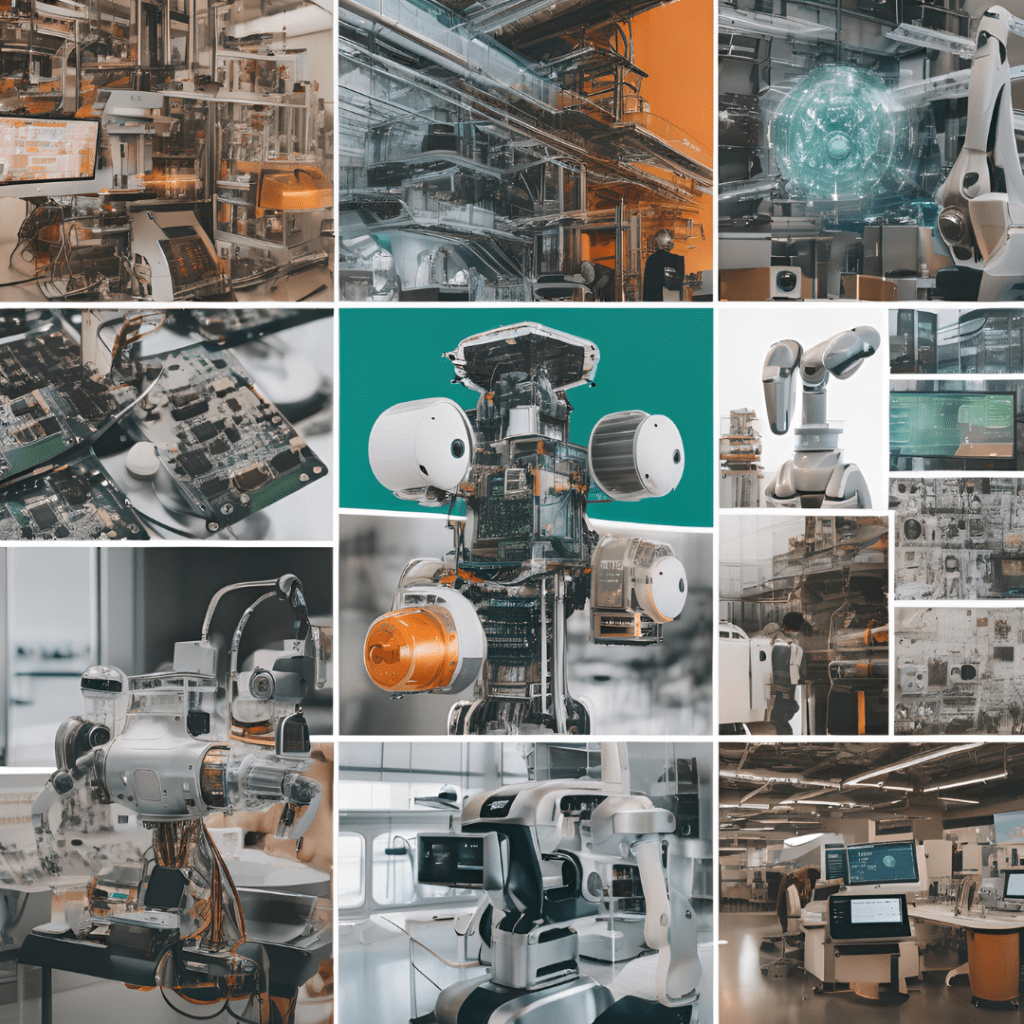
- Remote-access automated science labs: These labs will feature robotic instruments for experiments in biology, chemistry, and materials science. They will be accessible remotely and generate high-fidelity data for open access use.
- AI STEM education and workforce training: This will equip a diverse workforce with the skills needed to thrive in an AI-driven scientific landscape.
Benefits of AI for Science
Today’s science fiction is tomorrow’s science fact. — Isaac Asimov
AI for Science offers a multitude of benefits:
- Faster, more reliable discoveries: AI and automation can significantly speed up experiments while ensuring accuracy and reproducibility, potentially solving the issue of replicability in science.
- Enhanced collaboration: A unified network of computing, experimentation, and open data will foster stronger, more equitable collaborations across disciplines and geographical boundaries.
- Cost-effective research: By eliminating duplication of infrastructure and providing remote access to advanced tools, research costs can be significantly reduced, democratizing access for institutions of all sizes.
- New technologies and industries: AI for Science will lead to the creation of new AI-powered technologies, spurring entirely new industries and job opportunities.
Moving forward with AI for Science
The success of AI for Science hinges on a collaborative effort to develop an integrated strategy across the three pillars mentioned above. Several pilot projects are already underway, including:
- An integrated network of AI computing and data resources
- A unified network of automated experimental labs
- Educational programs focused on AI for Science
These advancements hold immense potential to revolutionize scientific discovery and its impact on society. Science fiction is about to become science fact. AI is supercharging discovery, and the future is wide open. Get ready for a world of mind-blowing breakthroughs!
 Afición Periodística